
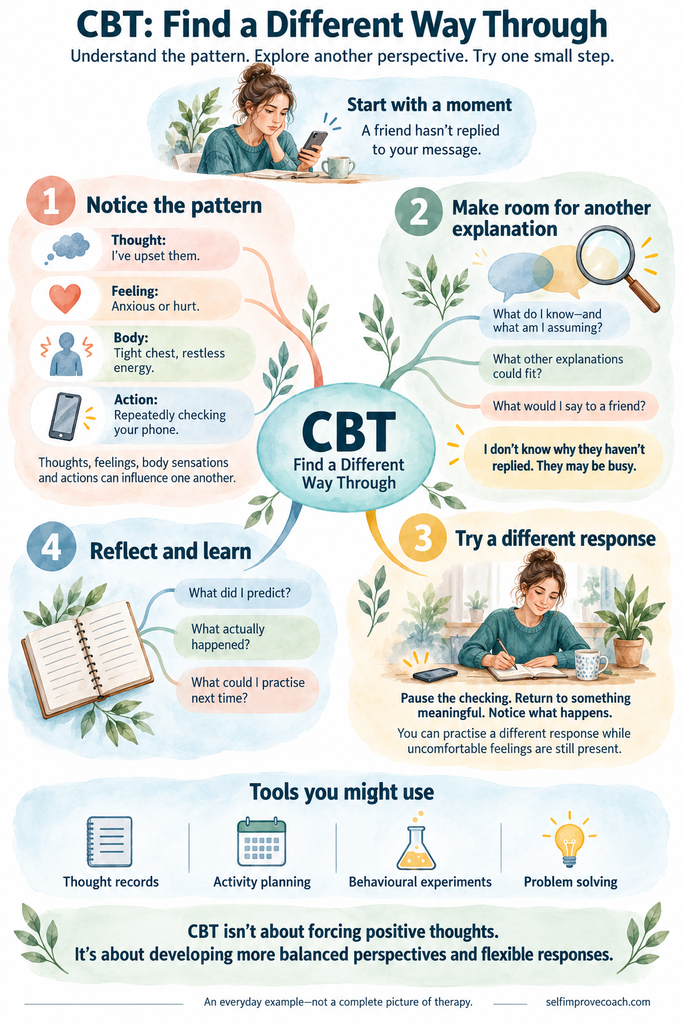
Sometimes a small moment-like an unanswered message-can spark a chain of thoughts, feelings and reactions. You might assume you have upset someone, notice tension in your body and find yourself checking your phone repeatedly. Cognitive behavioural therapy (CBT) helps you notice these connections, explore other explanations and practise a different response.
This illustrated guide takes you through four steps: notice the pattern, make room for another explanation, try a different response, and reflect on what you learn. The aim is to develop a fuller picture of the situation and give yourself more choice about what you do next. You can acknowledge uncomfortable feelings while taking a small, meaningful step.
The free worksheets below offer a practical way to explore these ideas at your own pace. Use a thought record to examine an interpretation, an activity planner to make room for what matters, a behavioural experiment to test a prediction, or a problem-solving sheet to work through a practical difficulty.
Choose one that fits your situation, or download the complete pack in printable or fillable format. Start with one everyday example; brief notes are enough to begin.
A practical place to begin
Free resources.
A small next step.
Thoughtful tools to help you notice patterns, make room for reflection and practise changes that matter to you.
Explore CBT: Find a Different Way Through. Choose a worksheet below, or download the complete collection. All resources on this page are free.
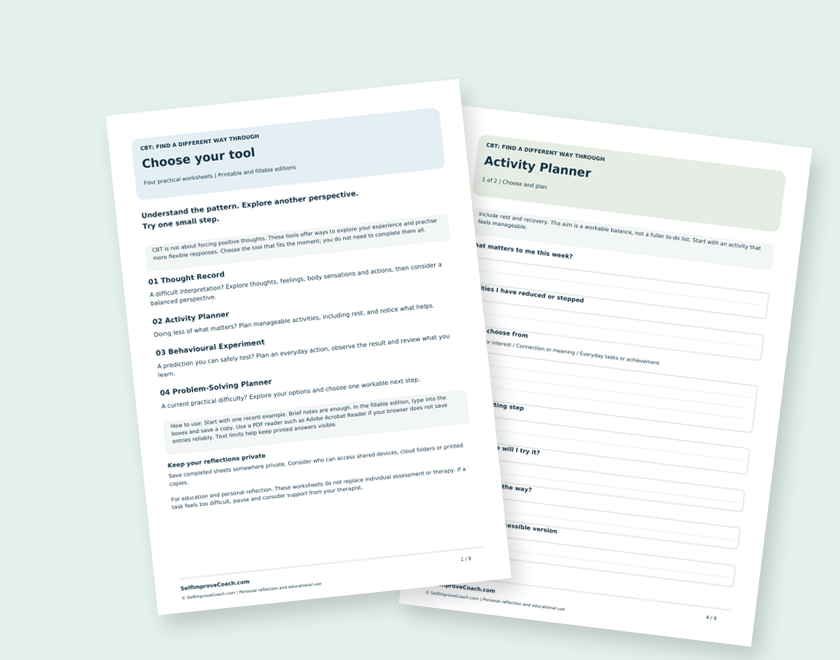
The Complete CBT Worksheet Pack
A practical place to begin. All four tools in one collection, with a short guide to help you choose what fits the moment.
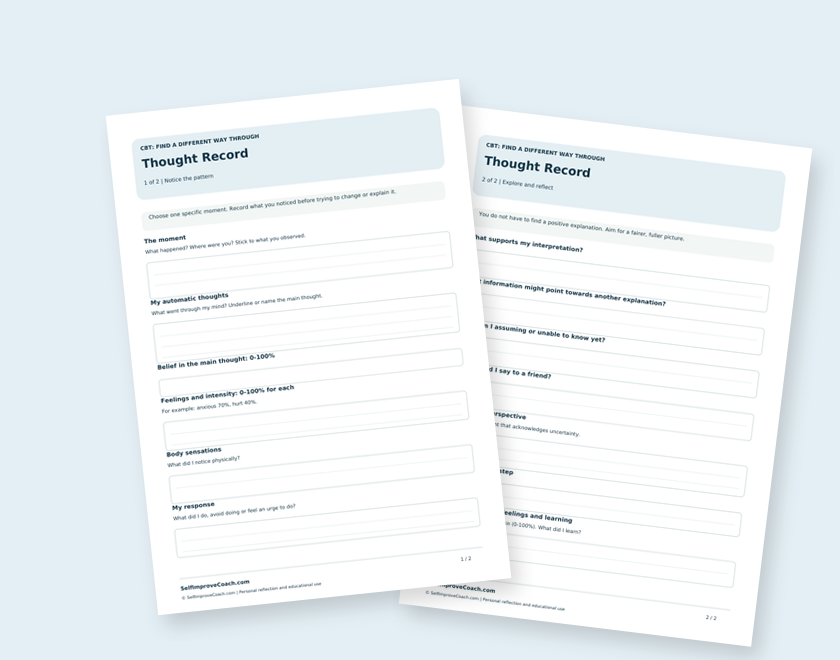
Thought Record
Make sense of a difficult moment. Notice your thoughts, feelings, body sensations and actions, then explore a more balanced perspective.
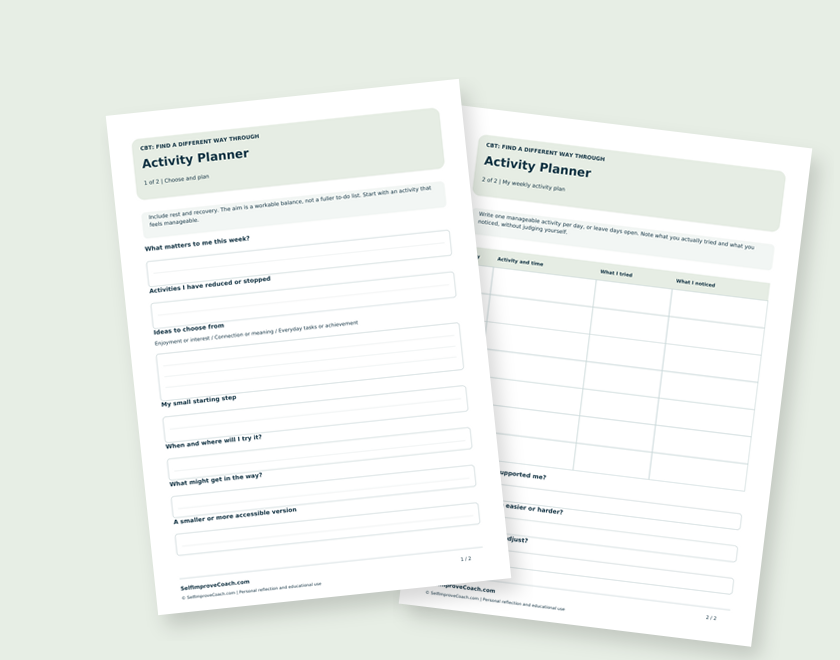
Activity Planner
Make room for enjoyment, connection and everyday tasks. Plan a manageable week, include rest and notice what supports you.
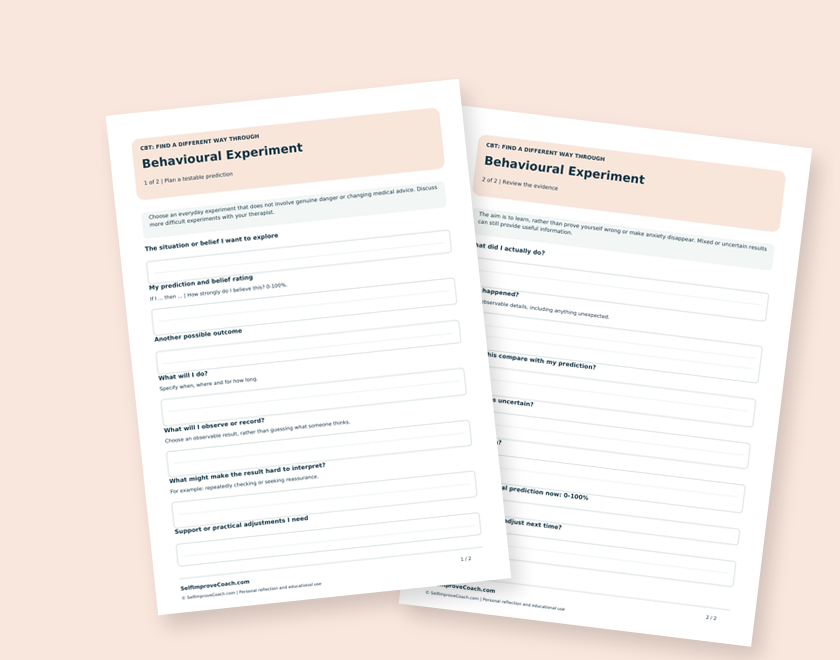
Behavioural Experiment
Explore a prediction through a safe, planned action. Record what happens and reflect on what you learn.
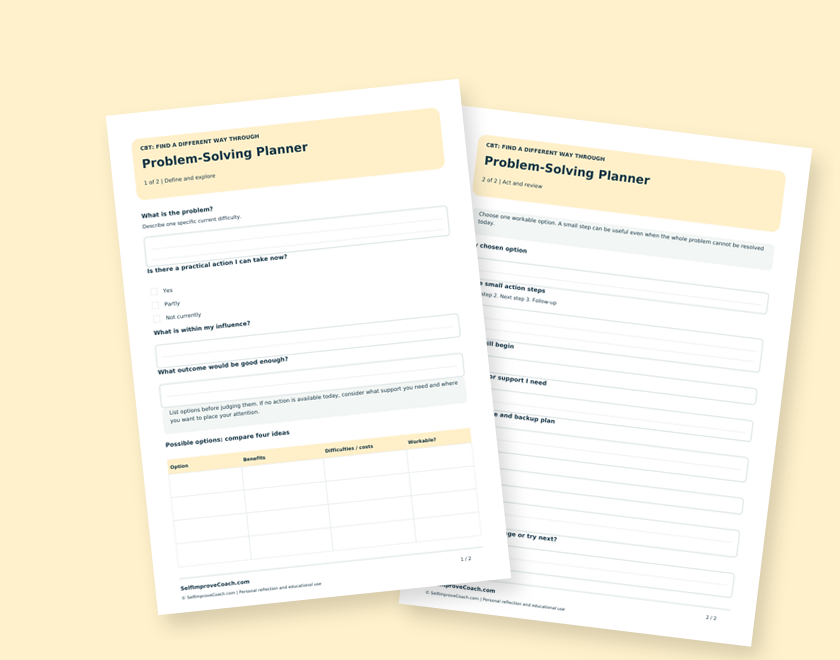
Problem-Solving Planner
Break a practical difficulty into smaller parts. Explore your options, choose one workable step and review how it goes.