
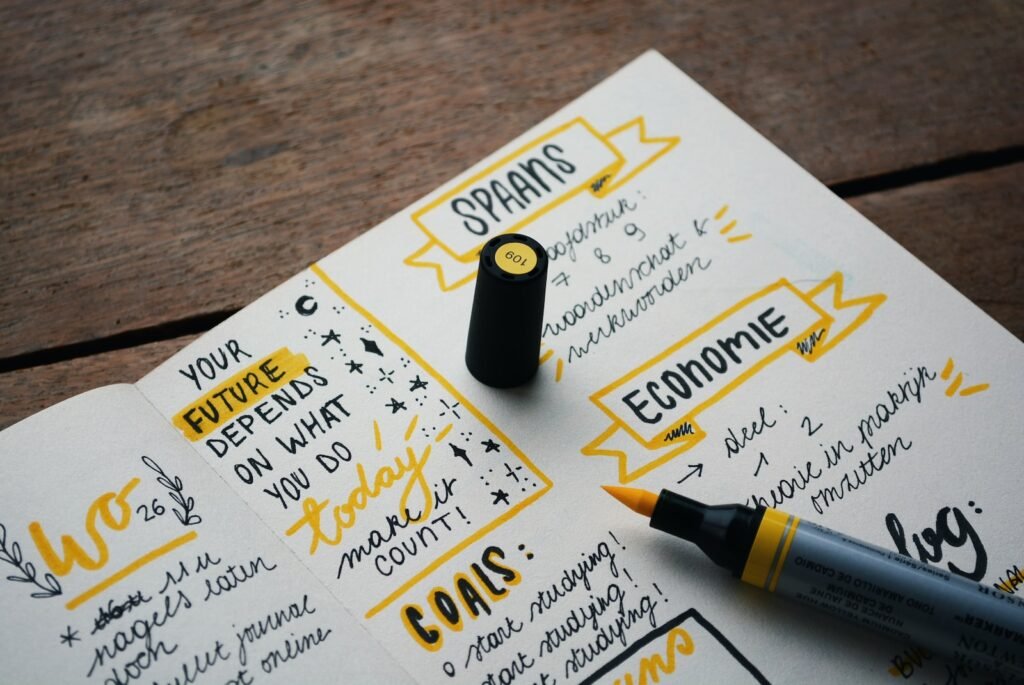
A goal can give you direction, but it cannot guarantee an outcome. Energy, health, resources and circumstances matter too. Use the steps below as planning prompts, adapting them to your situation.
1. Choose a reason that matters to you
Ask what you hope the change will make possible. “I want more contact with people I care about” may be more useful than “I should be more sociable”.
2. Describe an action you can take
Separate the hoped-for result from your next action. You cannot guarantee getting a particular job, for example, but you can choose a vacancy to read or prepare a section of an application.
3. Make the first step smaller
Choose an action that fits your current capacity. Reading one paragraph, gathering one item or spending a few minutes on a task can be enough to start.
4. Decide when and where
Make the plan concrete: “After breakfast on Tuesday, I will spend ten minutes identifying one suitable vacancy.” Adapt the timing if your day is unpredictable.
5. Anticipate one obstacle
Choose a realistic alternative. “If I am too tired for the full task, I will write down the next step and choose another time.” A smaller version can preserve direction without becoming a punishment.
6. Notice action and learning
Record what you tried and what you discovered. Progress can include recognising that the plan needs more support, a different approach or a change of goal.
7. Review and adjust
Ask whether the goal still matters, whether the step was workable and what would make another attempt easier. Continuing, pausing and changing direction can all be considered choices.
These are practical suggestions, not seven scientifically proven guarantees. If low mood, anxiety or other difficulties repeatedly get in the way, consider what additional support would help.
Further reading
General education and reflection; not individual assessment or treatment advice. Updated 24 October 2026. The examples are fictional.
Put an idea into practice
Explore worksheets and reflection tools for personal use and professional practice.
Browse free downloads →