
Free tools for therapists and clients
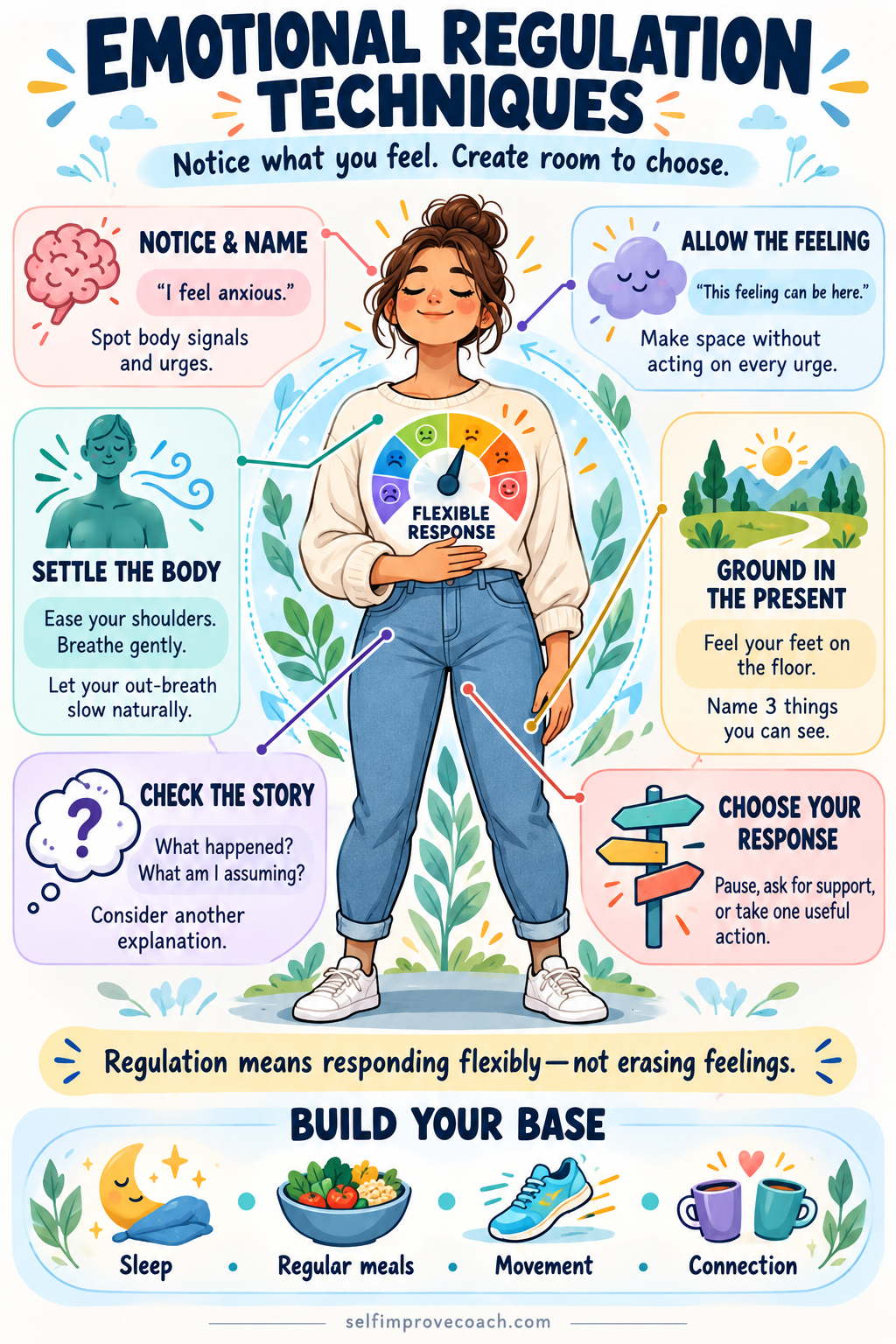
Notice the feeling.
Choose your next step.
Strong feelings can affect your thoughts, body and actions. Emotional regulation means noticing these experiences and responding in ways that fit your needs and what matters to you.
You do not have to make a feeling disappear. A pause, a little grounding, a different perspective or some support may help you find more choice in what you do next.
Explore the techniques below and put them into practice with 11 free worksheets. Choose one, or download the complete collection.
Notice and allow
Name the emotion, notice body signals and make room for the feeling without judging yourself for having it.
Pause and reconnect
Try grounding in your surroundings or gentle, comfortable breathing. Choose what feels accessible to you.
Choose and review
Check your assumptions, take a useful small action or ask for support. Notice what helps and adjust as needed.
Choose a worksheet
Start with the Emotional Regulation Worksheet to explore one experience, or choose a more focused sheet. There is no need to complete them all.
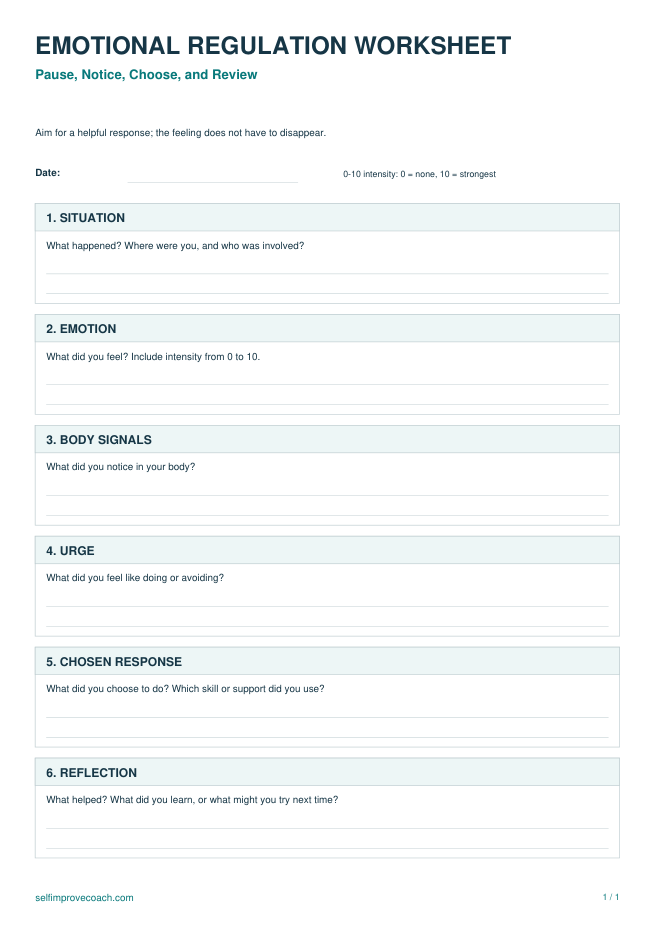
Emotional Regulation Worksheet
Explore a situation, feelings, body signals and urges, then reflect on your chosen response.
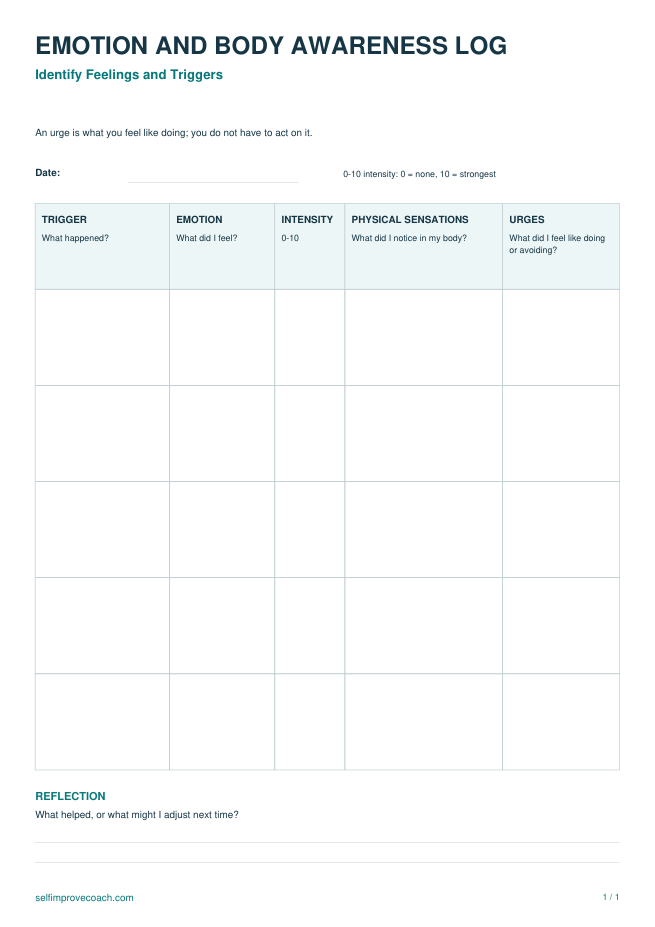
Emotion and Body Awareness Log
Notice triggers, emotions, intensity, physical sensations and urges.
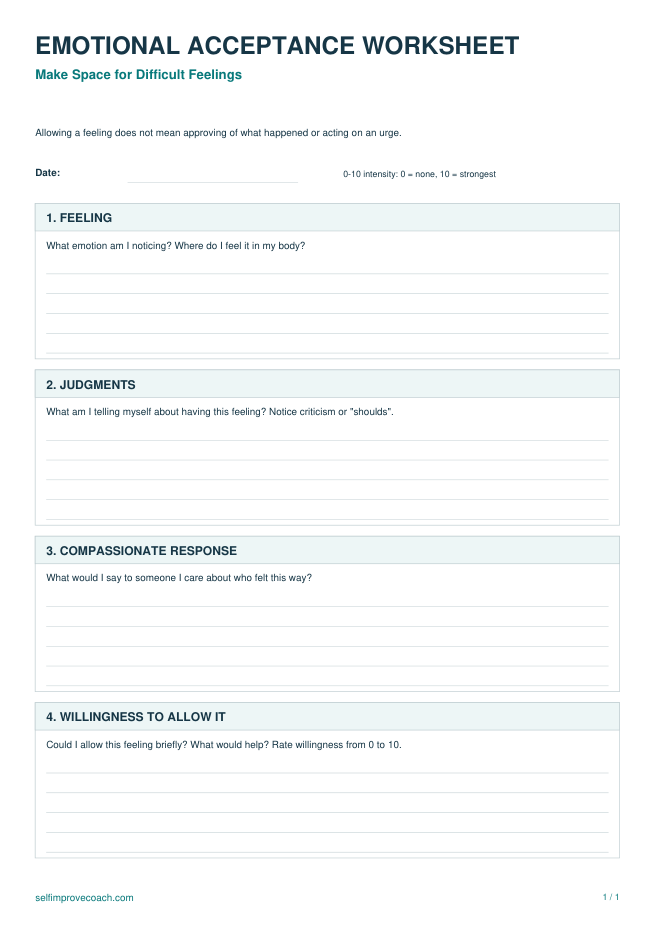
Emotional Acceptance Worksheet
Explore self-judgments, a compassionate response and willingness to allow a feeling.
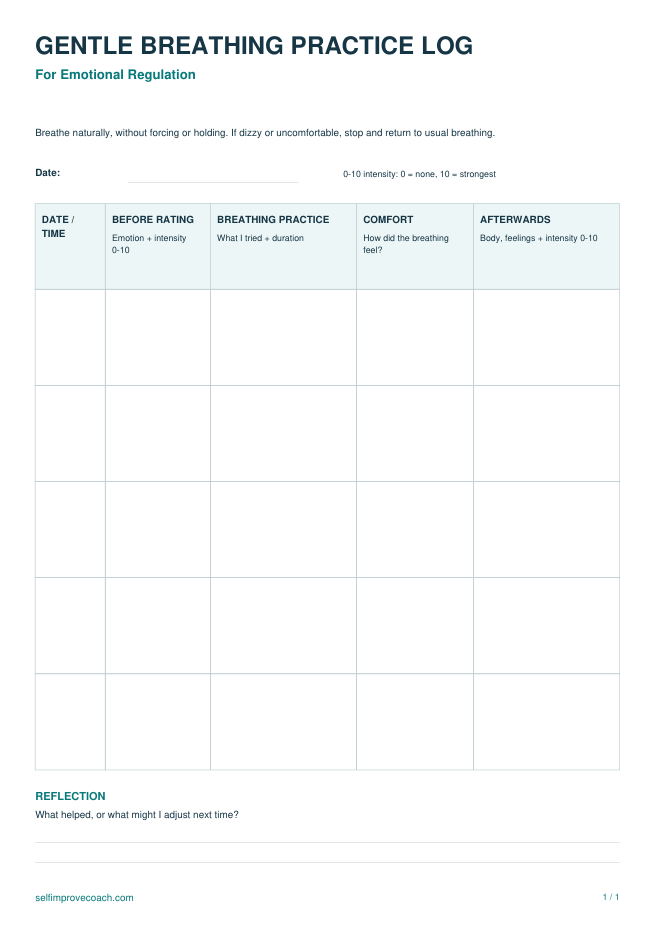
Gentle Breathing Practice Log
Record your starting emotion, breathing practice, comfort and observations afterwards.
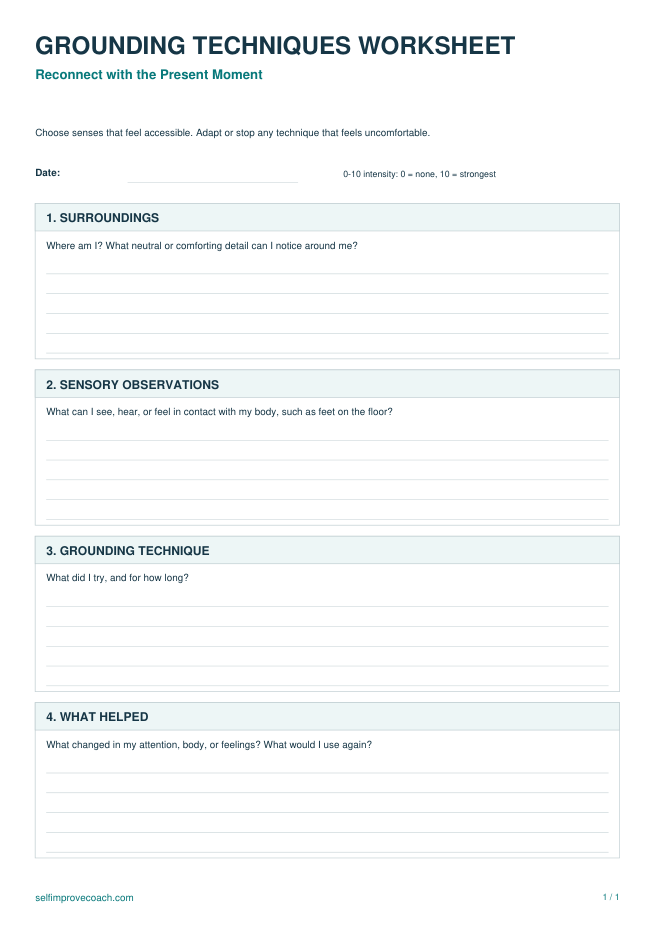
Grounding Techniques Worksheet
Notice surroundings and sensory details, try a grounding technique and reflect on what helped.
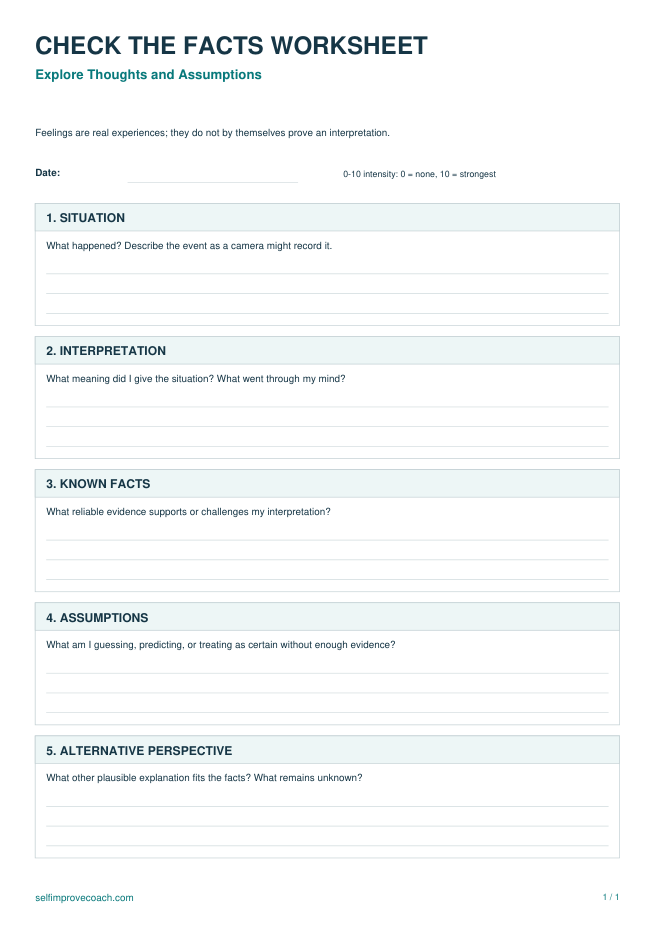
Check the Facts Worksheet
Separate the situation, interpretation, known facts and assumptions to find another perspective.
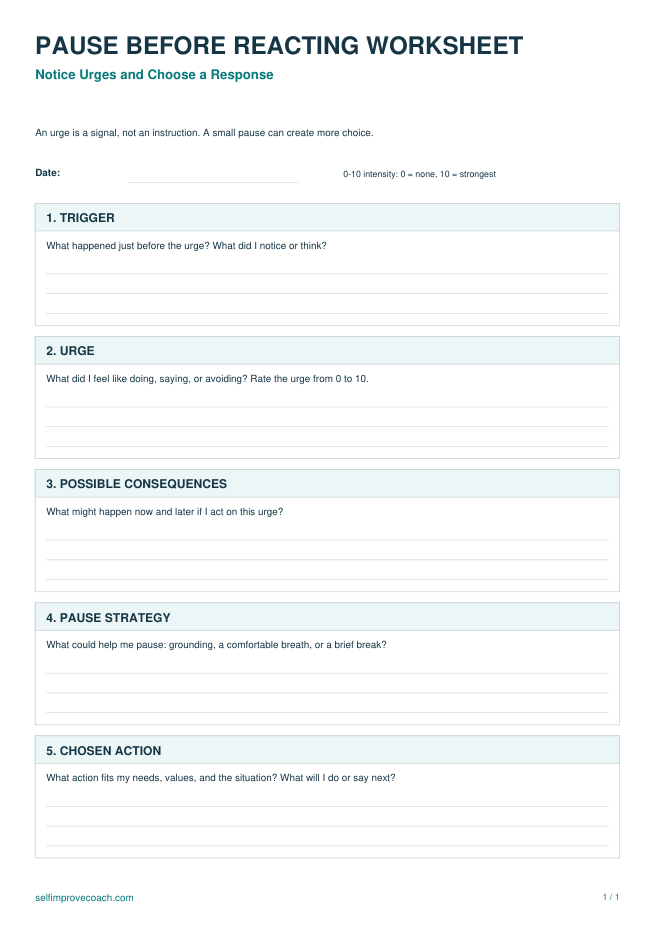
Pause Before Reacting Worksheet
Explore a trigger and urge, consider consequences and choose a deliberate next action.
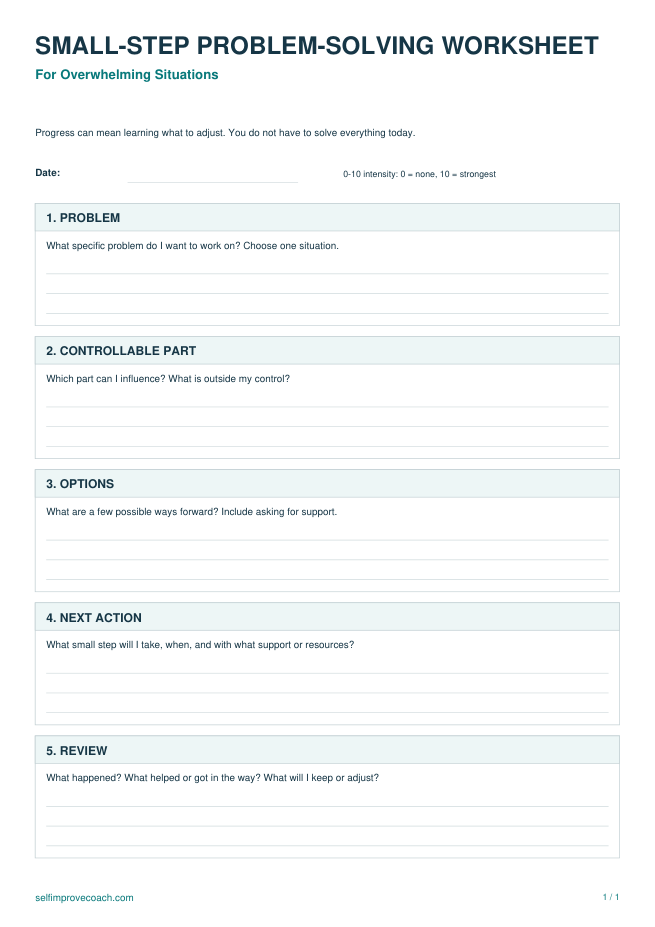
Small-Step Problem-Solving Worksheet
Identify what you can influence, explore options and plan a manageable next step.
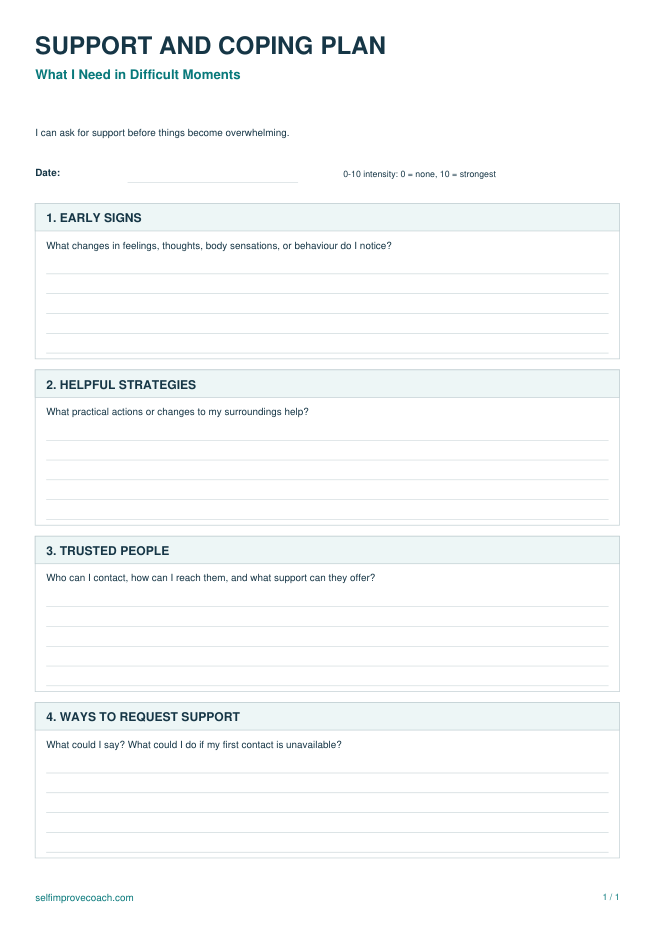
Support and Coping Plan
Plan for early signs, coping strategies, trusted people and ways to request support.
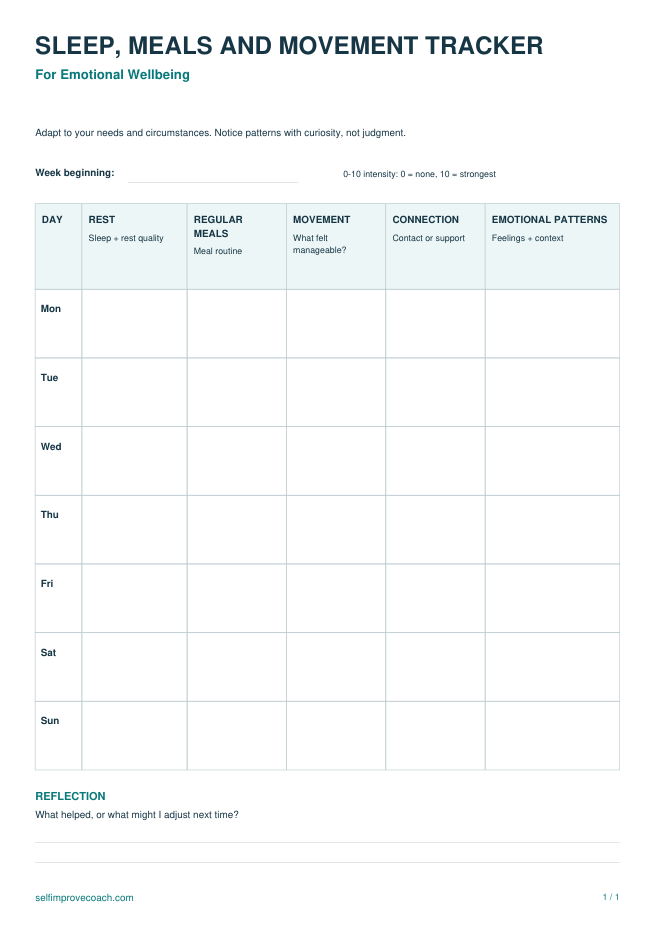
Sleep, Meals and Movement Tracker
Track rest, regular meals, movement, connection and emotional patterns across a week.
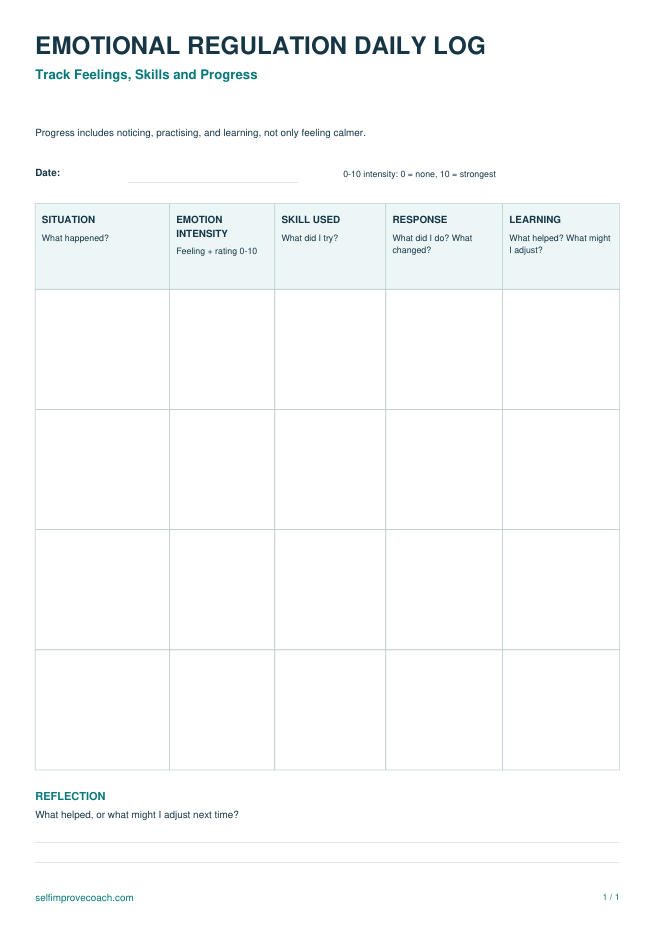
Emotional Regulation Daily Log
Record situations, emotion intensity, skills used, responses and learning.
A few helpful notes
How do I use the fillable PDFs?
Download the file and open it in a PDF reader that supports forms. Type into the fields, save a completed copy and reopen it to check that your entries remain. Keep entries brief so they stay visible when printing.
Can therapists use these with clients?
Yes. These sheets are intended for personal use and use within therapy. Choose and adapt activities collaboratively to suit the person’s needs, accessibility and circumstances. Please retain the SelfImproveCoach credit when sharing copies.
What if a technique feels unhelpful?
You can adapt it, pause, or choose another approach. For grounding, use senses that feel comfortable and accessible. With breathing, keep the breath natural and stop if you feel dizzy or uncomfortable. Feeling calmer is not the only sign of a useful practice.
Are my worksheet answers sent to this website?
No. These are downloadable files, rather than website forms. Your answers are not submitted through this page. Store completed files securely and take care when using shared devices or cloud folders.