
Understand · Explore · Put into practice
Practical Guides & Worksheets
Understand an everyday difficulty, explore useful ideas and find something practical to try.
These free topic collections bring guidance and resources together. See what is inside, choose what fits your needs and begin with one useful page.
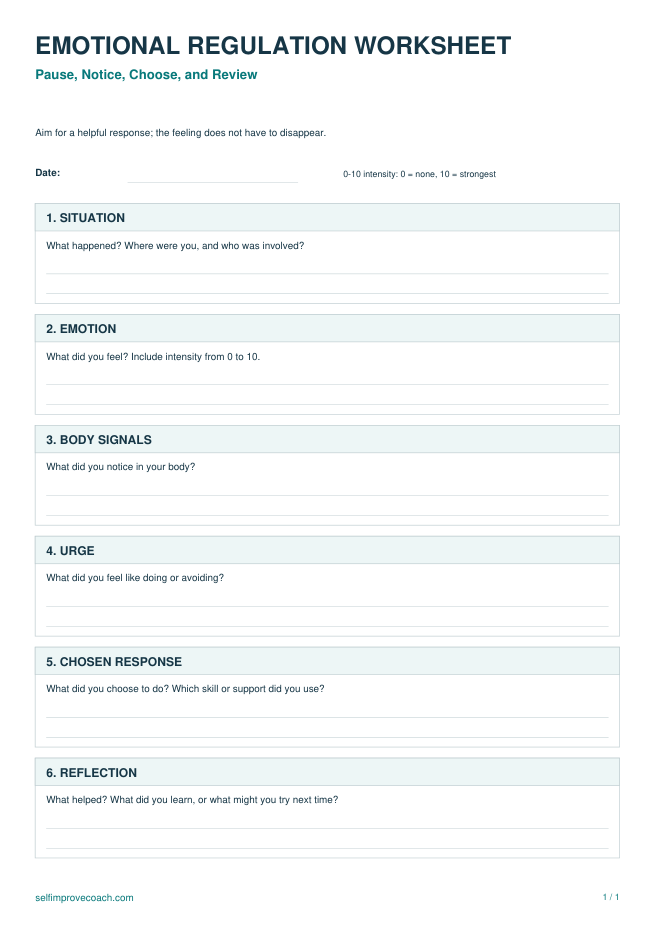
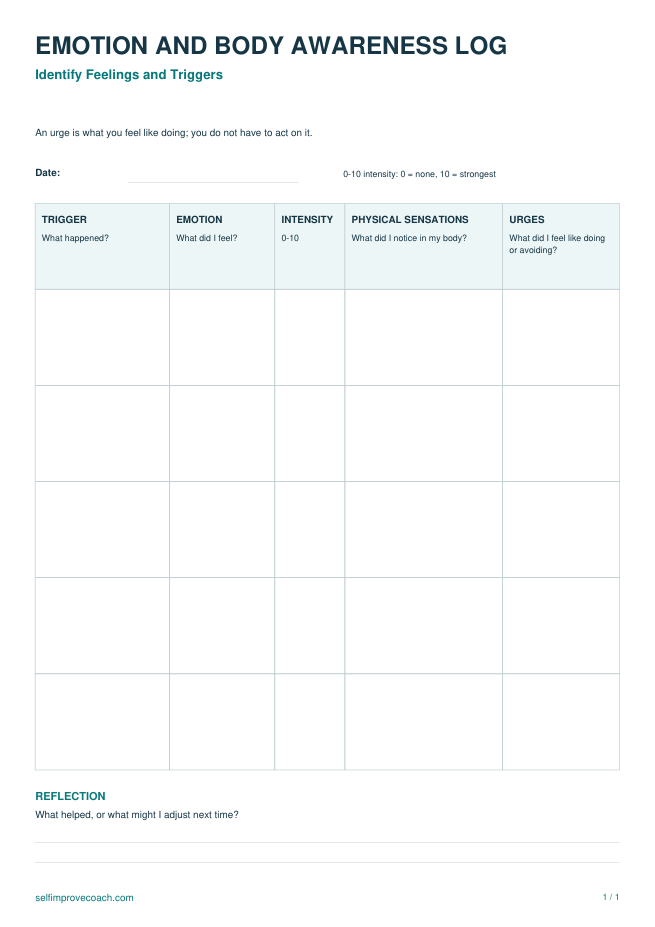
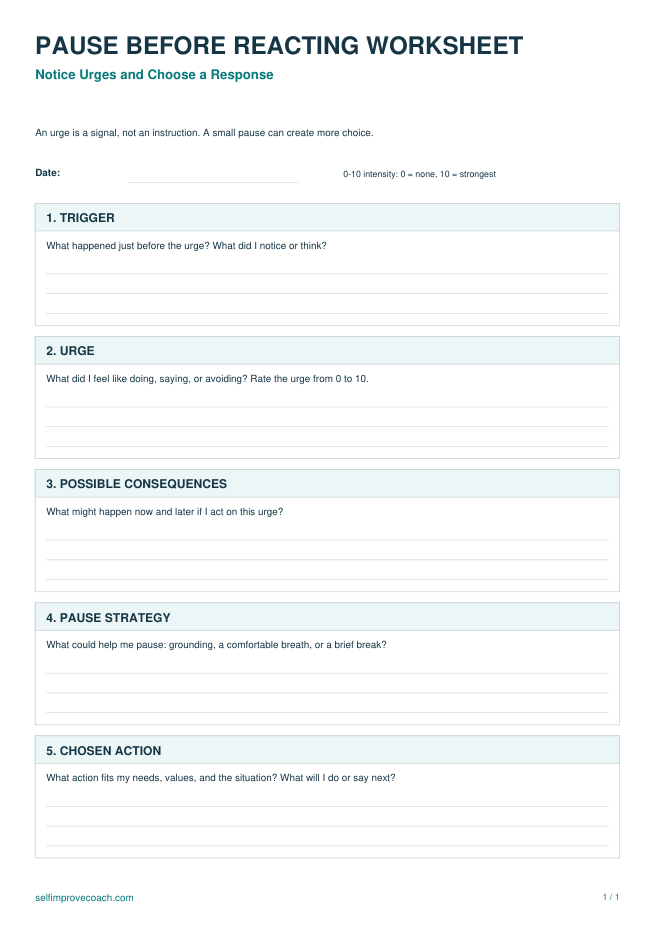
01 · Emotions & coping
Understand your feelings.
Choose a helpful response.
Feelings building up before you know what to do? Explore ways to notice what is happening in your body, make sense of the feeling and choose what might help.
- Notice emotions, body signals and urges.
- Explore grounding, acceptance, gentle breathing and checking the facts.
- Plan a useful pause, solve a small problem or build a coping plan.
For: personal reflection and therapist-supported practice.
A place to begin: choose the Emotion and Body Awareness Log if you are unsure what you are feeling.
Read the explanation, then download one worksheet or the complete collection.


02 · Communication & boundaries
Say what matters.
Make room to listen.
Do you hold things in, struggle to say no or leave a conversation feeling misunderstood? Explore how to express yourself, check understanding and make your needs and limits clearer.
- Understand communication patterns and what makes speaking up difficult.
- Prepare an I statement, set a boundary or make a clear request.
- Practise with examples, review a conversation and plan another attempt.
For: adults, clients and therapists. The collection includes 12 personal practice resources and two therapist tools.
A place to begin: My Communication Starting Point helps you choose a relevant goal.
Browse by stage: understand, prepare, practise and review.
Choose one useful starting point.
You do not need to work through every page. Read the guidance, choose a resource that fits and return when another topic feels relevant.
Looking for a particular download? Browse the free resource library →
These collections support education and reflection. Use therapist resources within your competence and adapt them to the person and context.
Continue exploring
Find practical tools for therapists and personal use.
03 · Autism, relationships & social energy
Understand social exhaustion.
Support connection with care.
When an autistic adult feels socially exhausted in a romantic relationship, a plan to do more may miss what they need. This visual guide helps therapists explore capacity, demands, communication and recovery collaboratively.
Free · 9-page visual PDF · Therapist guide
For: therapists supporting autistic adults in romantic relationships.
Explore the social burnout guide →A place to begin: explore the person’s current capacity and what uses or restores their energy.
A professional guide to support shared understanding and planning. It is not a diagnostic tool.