Four printable references for CBT therapists planning and reviewing behavioural experiments and exposure practice. Each offers prompts, examples or planning space. Choose the guide that fits the formulation, presentation and current task.
The main printable download opens Behavioural Experiment Design. Each guide has its own download button below. These are printable PDFs; the writing spaces are not interactive fields.
Planning a learning task
Free · Therapist guide
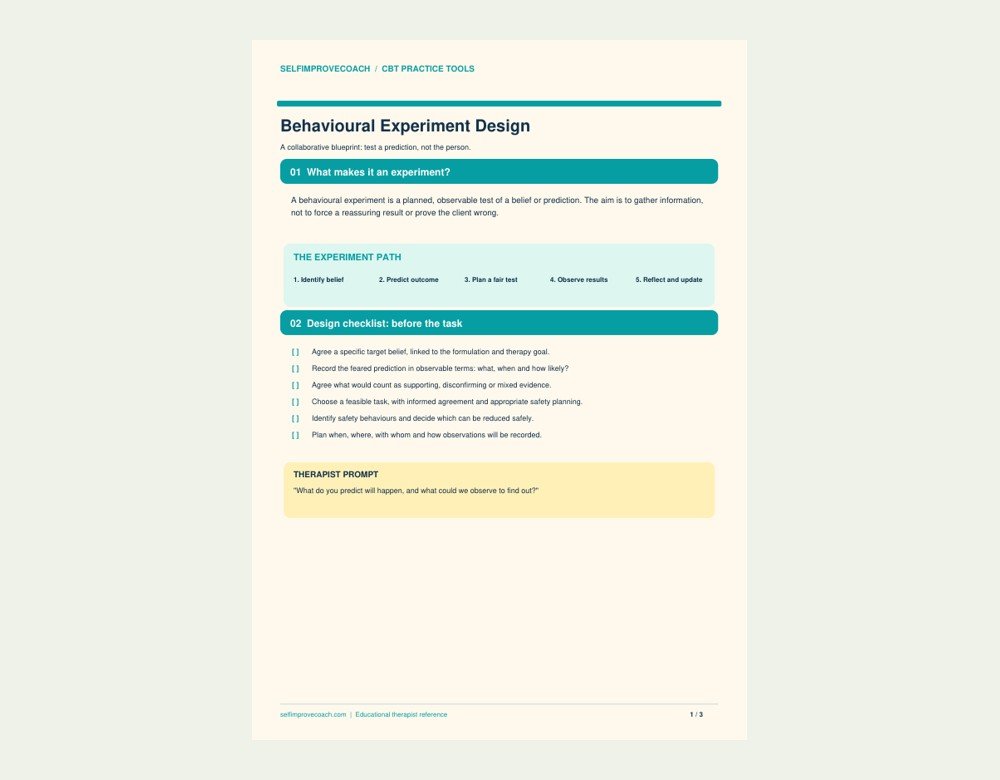
Behavioural Experiment Design
Define a testable prediction, plan observations and review the result. Includes a worked example, design checklist and short planning template.
3 pages · Printable therapist guide
Free · Therapist guide
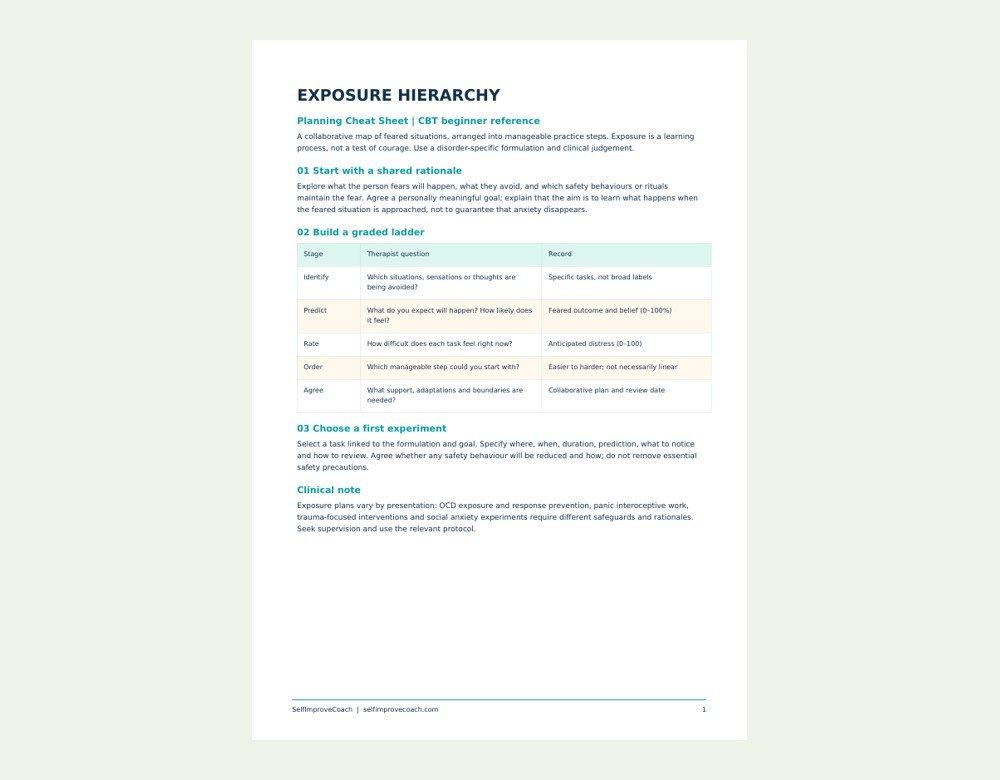
Exposure Hierarchy Planning
Organise specific practice steps with predictions, anticipated difficulty and a review plan. Includes an example hierarchy and reusable planning grid.
3 pages · Printable therapist guide
Reviewing barriers and learning
Free · Therapist guide
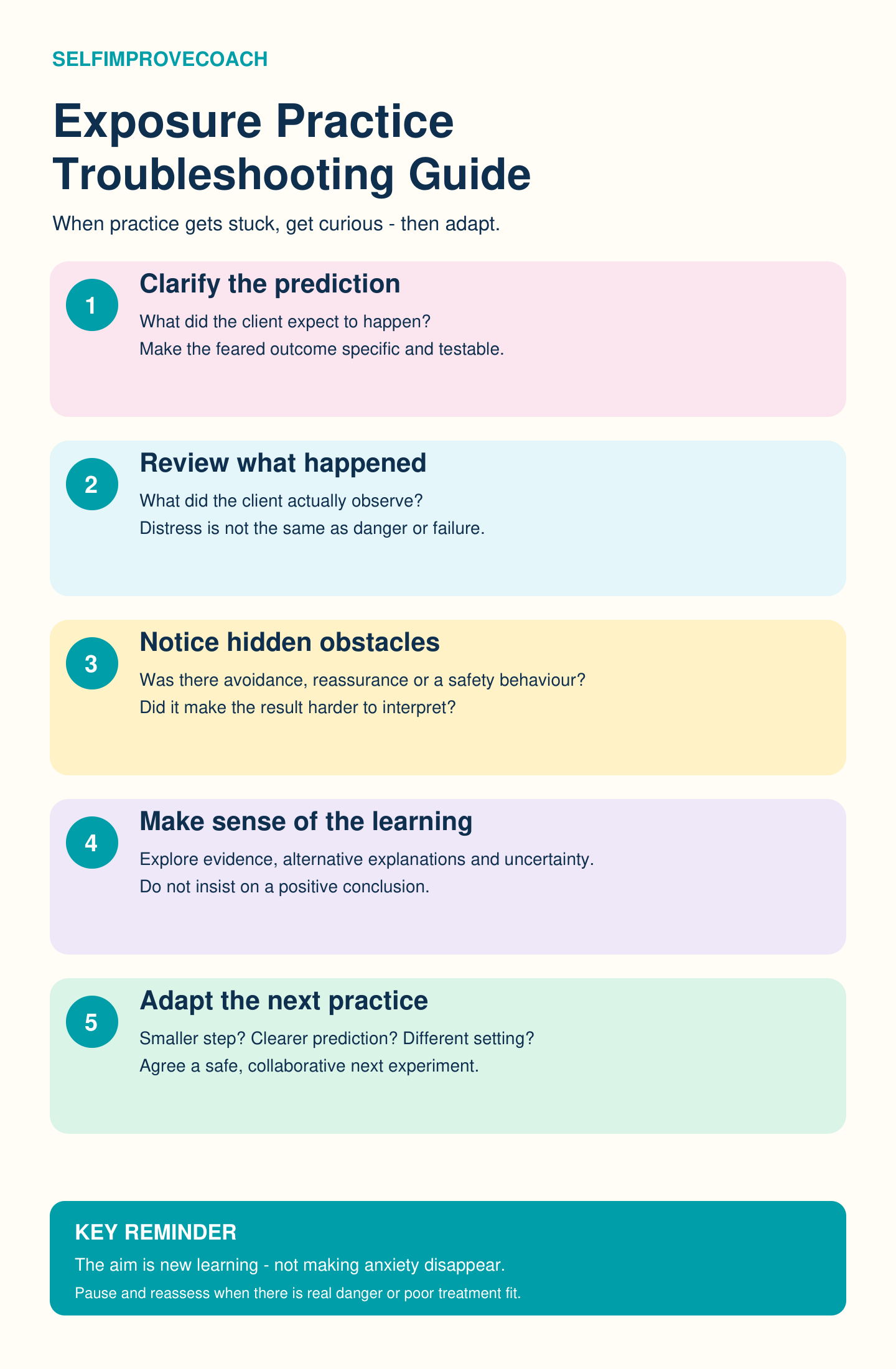
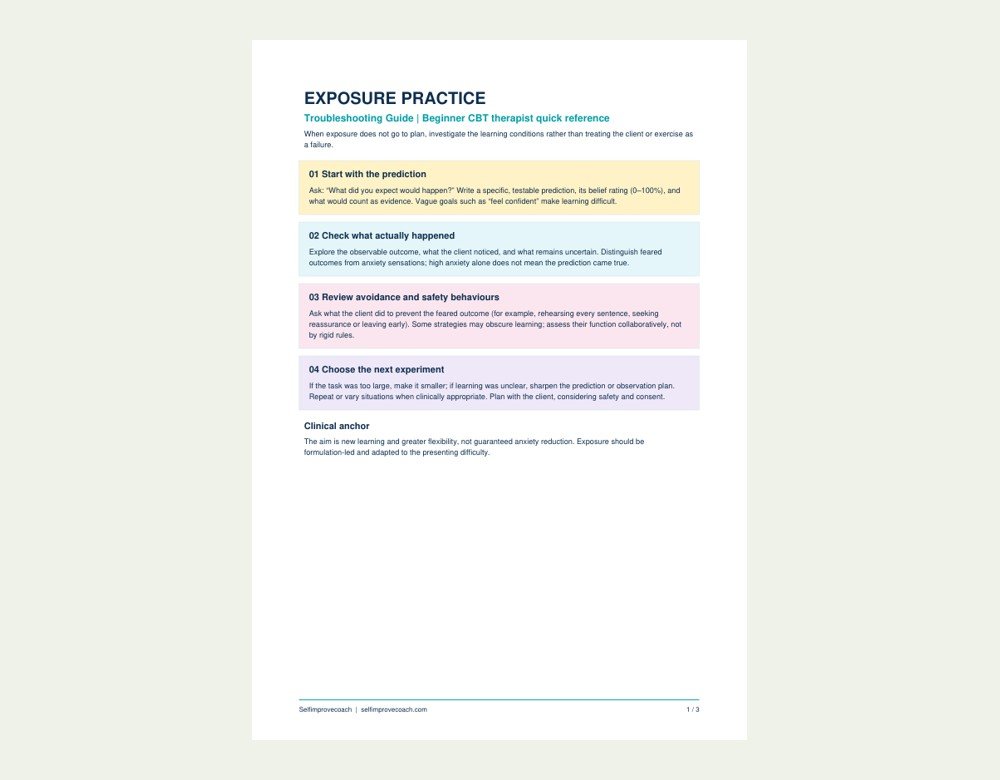
Exposure Practice: Troubleshooting
Explore unclear predictions, practical barriers, high distress and outcomes that are difficult to interpret. Includes review prompts and a worked example.
3 pages · Printable therapist guide
Free · Therapist guide
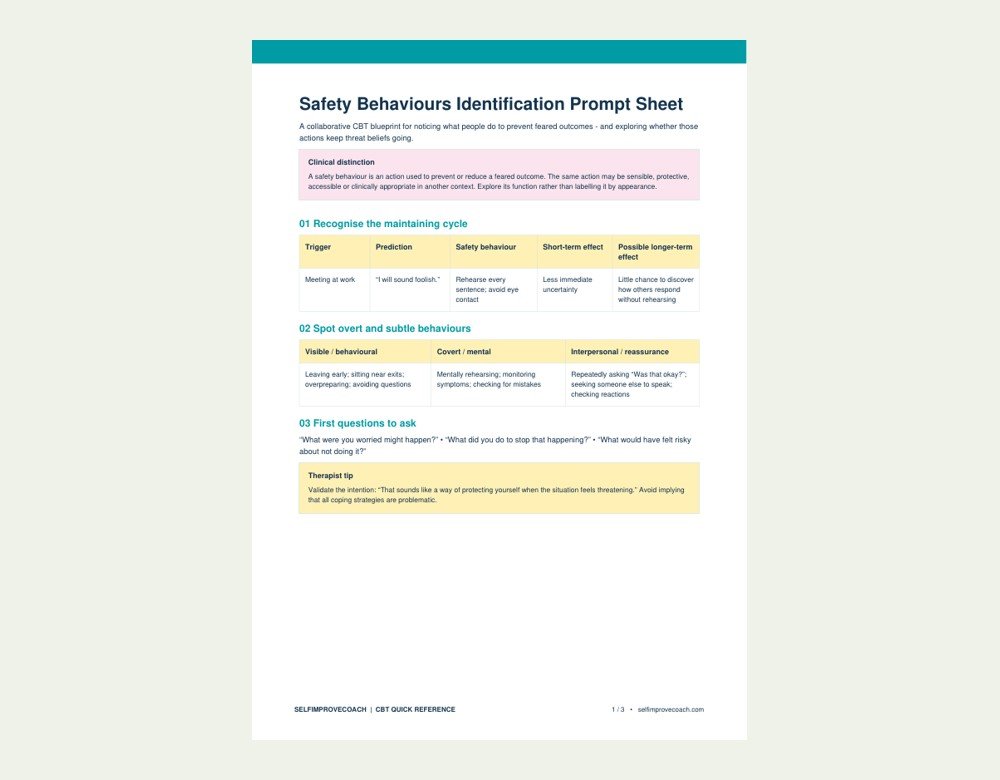
Safety Behaviours Identification
Explore the function of visible, mental and interpersonal coping responses. Includes collaborative prompts and distinctions between maintaining responses and essential protection.
3 pages · Printable therapist guide
Use within the relevant treatment approach
These guides are written for therapists. They support collaborative planning and review alongside clinical assessment, consent, supervision and the relevant disorder-specific formulation and protocol.
The exposure planning guide distinguishes approaches for different presentations. This collection is not a single exposure protocol or a self-directed programme.
Keep genuine safety and accessibility needs in view
The guides emphasise the function and context of a coping response. Essential safety precautions and disability accommodations should be retained. If a proposed task involves actual danger, destabilisation, consent concerns or uncertainty about treatment fit, pause and seek appropriate assessment or supervision.
Use the examples as illustrations rather than prescribed tasks. The aim of the references is to support a clear learning question, observations and a collaborative review, without promising a particular result.
Related resources
The CBT Formulation & Therapy Goals collection supports developing a shared understanding and meaningful goals. The Behavioural Activation & Between-Session Practice collection offers tools for planning and reviewing manageable activities.
Visual reminder
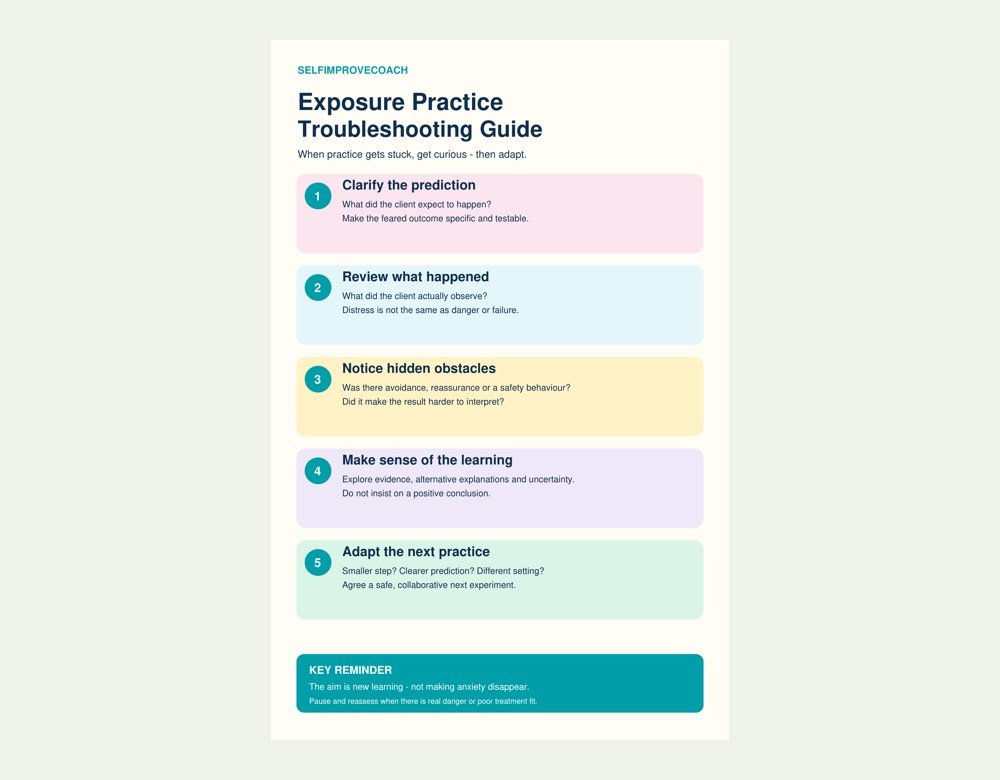
An optional PNG image to accompany the therapist references.
Free · PNG visual guide
Exposure Practice Troubleshooting
A concise visual reminder to accompany the related worksheet or therapist guide.
PNG image · Not a fillable worksheet
Use and permissions
You may print for personal use or for use with your own therapy clients, keeping SelfImproveCoach branding intact. Do not resell, redistribute the files or rebrand them.
These materials support education and reflection. They do not replace individual assessment or therapy.